Why Toddlers Often Misreport Events: Understanding Early Childhood Communication
October 27, 2024
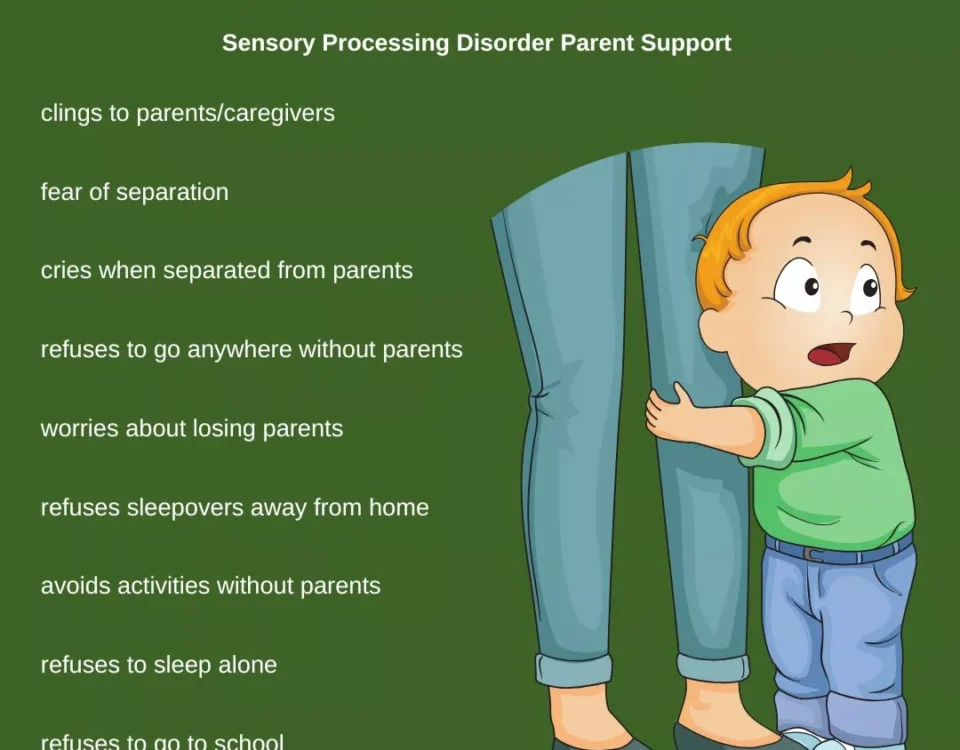
If your child has recently started crying before daycare, clinging to your legs at the door, or hanging back at playtime while other kids run around together — take a breath. What you’re seeing is not a problem with your child. It’s something far more understandable: your child is simply meeting the world for the first time, and the world is not your living room.
The Context You Know Isn’t the Only Context That Exists
Here is the most important thing to understand about your child’s behavior at daycare: you have only ever seen your child in one environment — yours. The rhythms of your home, the familiar faces, the unspoken rules of your family’s daily life — these are the entire universe your child has known. Daycare is not just a new place. It is a new reality.
When a child has been raised primarily by their parents, with limited exposure to other children their age, two very predictable things happen when they enter a group care setting:
• They struggle with the transition itself — the unfamiliar sights, sounds, routines, and faces.
• They don’t yet know how to share space, attention, or time with other children — because they never have had to.
Neither of these is a flaw. Both are simply the natural result of a life lived, until now, mostly within the warm orbit of your family.
Why the New Environment Feels So Big
To an adult, a daycare room is cheerful and welcoming. To a toddler who has only known home, it is genuinely overwhelming — the noise, the number of children, the different adult voices, the unfamiliar smells and schedules. This is not drama. This is a small person encountering something genuinely new.
This discomfort often shows up as separation anxiety — the crying, the clinging, the protests at the door. And while separation anxiety is a well-documented developmental stage (the American Academy of Pediatrics considers it completely normal, typically beginning between 10 and 18 months), it is amplified in children who have had fewer experiences being cared for outside the family. The lesson that you leave and you come back is one they simply haven’t had as many chances to learn yet.
| 100% | of toddlers in one study struggled with separation anxiety at childcare |
| 18 months | is the age at which separation anxiety typically peaks, per child development research |
| Minutes | is how quickly most children settle after drop-off, once parents have left |
The good news: the lesson is learnable, and your child is learning it every single day.
When Your Child Doesn’t Play With Others — What’s Really Happening
Just as striking for many parents is watching their child stand at the edge of a group, reluctant to join in, while other children seem to move through the social world effortlessly.
Here is the honest truth: children who grow up playing primarily with adults, or with very limited peer interaction, are not yet fluent in the language of child-to-child play. They know how to relate to you — how to get your attention, how to share a joke, how to navigate your mood. But a room full of two- and three-year-olds operates on entirely different social rules, and those rules take time and practice to absorb.
This is not shyness, not antisocial behavior, and not a sign of a developmental concern. It is simply inexperience. The child who has spent most of their time with family is not broken — they are new to this. And like any new skill, peer play develops with exposure, patience, and time.
Children who start daycare with less peer experience often:
• Observe before participating — this is smart, not withdrawn
• Struggle with sharing toys or adult attention — because they’ve never had to compete for either
• Parallel play (near but not with other children) before gradually joining in — this is a recognized and healthy developmental stage
What You Can Do
• Keep goodbyes short and warm. A drawn-out farewell signals to your child that there is something to worry about. Give a hug, say your goodbye phrase, and go. Lingering amplifies distress.
• Create a consistent goodbye ritual. A special handshake, three kisses, a specific phrase — anything repeatable helps your child know what comes next. Predictability is calming.
• Stay calm — your child reads you. Children are finely tuned to parental anxiety. If you look uncertain, they conclude there is something to be uncertain about. A confident, warm goodbye is one of the most powerful gifts you can give them at the door.
• Never sneak out. Disappearing without a goodbye teaches your child that your departures are unpredictable. Always say goodbye, even if it causes brief tears.
• Practice separations at home. Leave your child with a trusted family member for short periods. These small experiences build the foundational understanding that you always come back.
• Talk about daycare positively at home. Ask about their friends, what they played, what made them laugh. Avoid leading with “was everything okay?” — which inadvertently implies it might not have been.
• Talk to us. We watch your child every day — after you’ve left. We see the moment they stop crying and start laughing. We see them inch closer to the group, then one day step right into it. We are your partners in this. Ask us.
What Happens After You Leave
Most children stop crying within minutes of drop-off. Most children who stand at the edge of the group one week are chasing a friend around the playground the next. The version of your child you see at the door is not the whole picture — it is just the hardest moment of the transition.
According to the National Association for the Education of Young Children (NAEYC), skilled caregivers help children develop their own emotional coping strategies over time. Each drop-off where your child learns you leave and you come back is building trust. Each day spent navigating a room full of peers is building a social fluency that will serve them for life.
The truth is, children who come to daycare with less experience of the outside world often have the most to gain — and they gain it faster than you’d expect. What looks like struggle is actually growth, happening in real time.
We are honored to be part of this chapter with your family. Our door is always open.